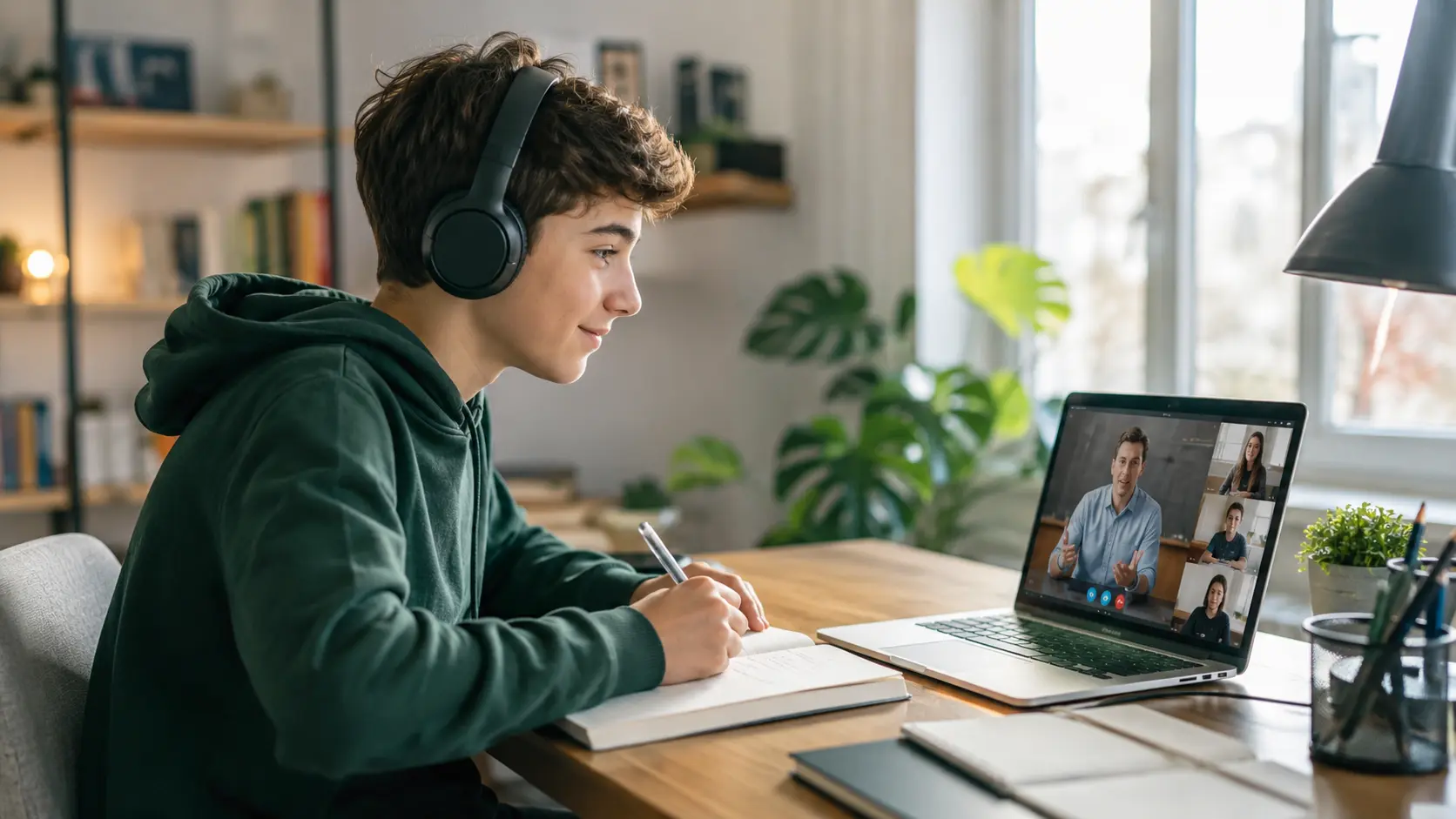
During COVID, my home felt like a small university spread across several rooms.
I have four daughters, today between the ages of 18 and 26, and during those months I witnessed something that many reports would later describe with charts, percentages, and solemn terminology: online learning was not simply “school from home.” It was a social experiment conducted in pajamas, with Wi-Fi as national infrastructure, the kitchen turned into a study hall, and the phrase “Can you hear me?” becoming the soundtrack of an entire generation.
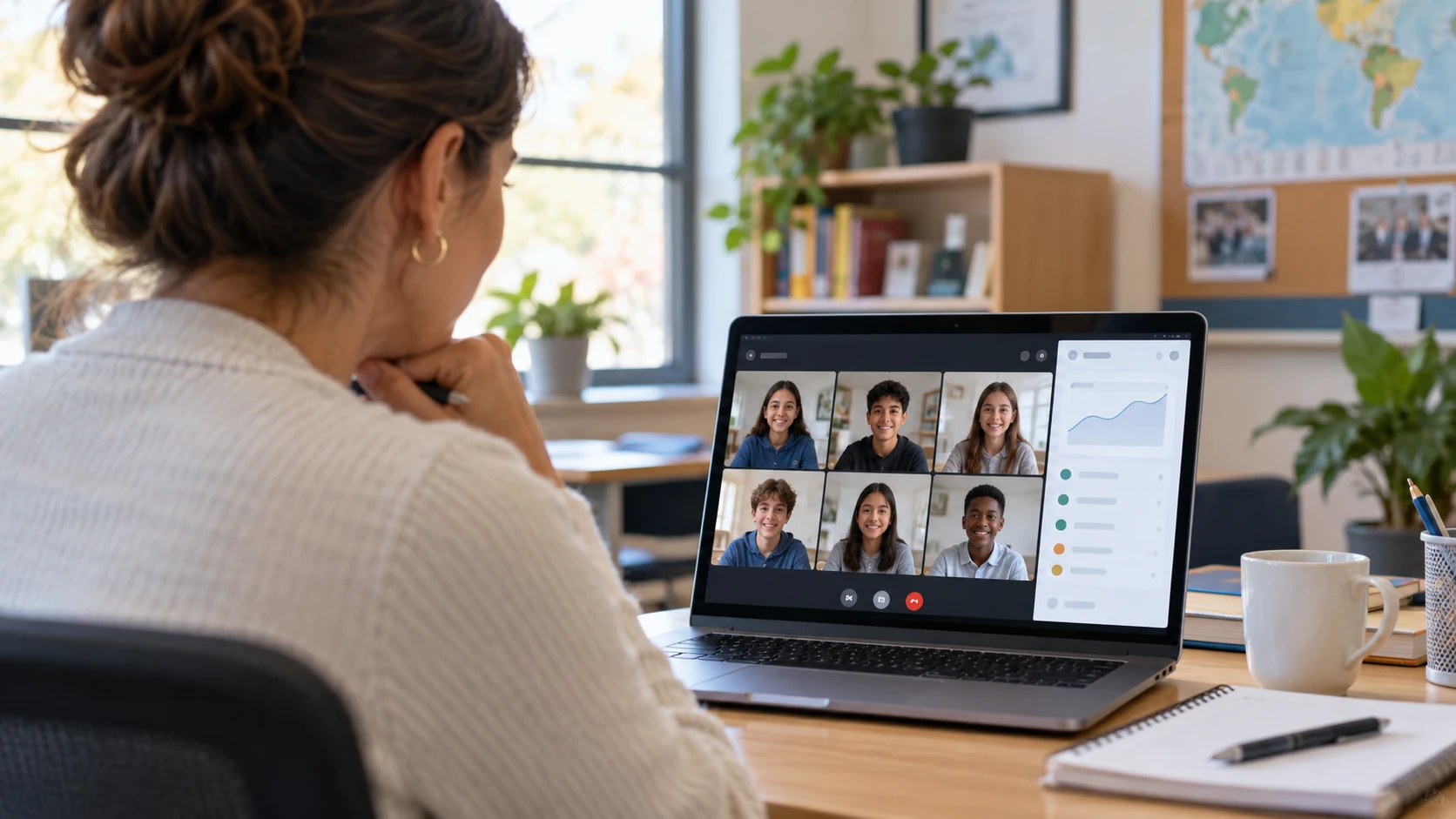
As a father, I saw very different scenes. One daughter was truly paying attention. Another seemed to be paying attention. Another was following the class while doing something else, with that teenage multitasking ability that borders on dark magic. And then there was the great gray area: cameras off, microphones muted, silent chats, and teachers forced to speak to a wall of initials inside black squares.
But as an entrepreneur working in AI and digital interaction, that scene made me think about something else: maybe the problem was not distance.
Maybe the problem was that, at a distance, we had lost the signals.
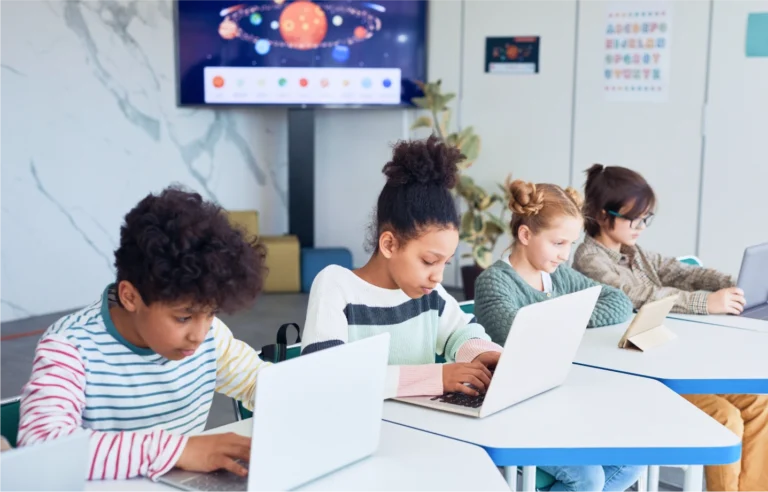
In a physical classroom, a teacher understands. They understand when the energy drops, when an explanation is not landing, when students are physically present but mentally elsewhere, when it is time for a break, an example, a question, or even a joke.
Online, many of those signals disappeared.
Or worse: they were still there, but nobody was reading them.
Returning to the Classroom Was Necessary. But It Cannot Be the Final Answer
After COVID, many schools and universities pushed to bring students back into physical classrooms. In many ways, this was inevitable. Education is not just the transmission of content. It is relationship, routine, social life, body language, eye contact, hallways, friendships, conflicts, and growth.
But there is a risk: confusing the return to the classroom with the solution to the problem.
Saying “online classes produced lower engagement, so everyone must go back to in-person learning” is understandable. But it is also incomplete.
It is like saying that because the first airplane did not fly very well, humanity should have gone back to horse-drawn carriages.
The most useful question is not: “Do online classes work worse than physical classes?”
The right question is: “Why did many online classes work worse, and what do we need to change to make them work better?”
Because if the answer is only “bring everyone back to the classroom,” we miss a historic opportunity: building digital learning experiences that are truly alive, inclusive, measurable, and engaging.
This matters because the educational impact of the pandemic was not solved simply by reopening schools. The State of Global Learning Poverty: 2022 Update, published by the World Bank, UNESCO, UNICEF, FCDO, USAID, and the Bill & Melinda Gates Foundation, warned that school closures deepened an already serious learning crisis. In other words, going back to school buildings was necessary, but not sufficient.
Remote Learning Did Not Fail. Improvised Remote Learning Failed
During the pandemic, schools did what they could. In just a few days, teachers, students, and families had to turn a system designed for in-person learning into a digital one.
That was not planned innovation. It was emergency adaptation.
We took the traditional lecture and squeezed it into a video call.
Same pace. Same length. Same structure. Same expectation of attention.
But without the classroom. Without proximity. Without nonverbal feedback. Without the background noise that tells a teacher, “I’m losing them.” Without the subtle choreography of glances, posture, and reactions that makes a classroom feel alive.
So it is no surprise that many students disconnected.
Sometimes technically.
More often, emotionally.
The UNESCO Global Education Monitoring Report 2023 showed how uneven the reach of technology-based education was during the pandemic. Remote learning had the potential to reach more than one billion students, but failed to reach at least half a billion. That is not a small technical problem. It is a massive design, access, and engagement problem.
A virtual classroom cannot be a faded copy of a physical classroom. It needs to be designed according to its own rules.
What Does Student Engagement Really Mean?
Engagement does not mean “keeping the webcam on.”
It does not even mean “staying connected until the end.”
A student can be connected and completely elsewhere. They can have the camera on and still be thinking about dinner, a text message, an exam, or a personal problem.
Or they can have the camera off and be following with full attention.
Engagement is a combination of attention, participation, motivation, understanding, emotion, and sense of presence.
It is what happens when a student does not simply endure the lesson, but enters into it.
In person, teachers naturally perceive many of these signals. Online, however, we need a new level of awareness.
Not to control students.
But to help teachers understand when and how to intervene.
Why Did Online Classes Reduce Engagement?
Online classes often reduced engagement for five main reasons.
First: isolation. Studying alone in front of a screen can make students feel like spectators rather than members of a learning community.
Second: weak interaction. Many online lessons became digital monologues. The teacher spoke, the students listened — or at least everyone hoped they were listening.
Third: lack of immediate feedback. In a classroom, a teacher sees when they need to slow down. Online, they often discover it too late: in a test, in an assignment, or in a student’s disengagement.
Fourth: cognitive fatigue. Spending hours in video calls requires a different kind of energy. The brain has to compensate for the lack of physical presence, read partial signals, and handle constant distractions.
Fifth: tools designed for meetings, not learning. Many platforms built for business meetings were used as classrooms. But a class is not just a long meeting with homework attached.
A 2024 systematic review on online learning, academic performance, and engagement confirms that online learning is not simply “good” or “bad.” Its outcomes depend on several factors, including interaction, motivation, technology quality, connectivity, and the way learning experiences are designed.
Physical Presence Has a Superpower: Human Feedback
A good physical classroom is full of data.
We just do not call it data.
A lost gaze. A raised hand. A laugh. A change in posture. A sudden silence. A group that comes alive. A question that opens a discussion. An expression that says “I don’t get it” even when the mouth says nothing.
Experienced teachers read these signals constantly.
It is a form of human, relational, almost musical intelligence. The teacher conducts an orchestra made of attention.
In online classes, that orchestra became silent.
And this is the point: to improve virtual learning, we should not only digitize content.
We must also digitize the classroom’s ability to listen.
The Question Is Not “Online or In Person?” The Question Is “How Do We Create Presence Online?”
Presence is not only about being in the same place.
It is about feeling seen, involved, and called into the experience.
An online class can create presence if it uses frequent interactions, short questions, moments of choice, micro-assessments, adaptive content, smart breaks, peer collaboration, and real-time feedback.
We do not need to turn every lesson into a video game.
We need to prevent it from becoming mandatory television.
The difference is huge: in educational television, the student watches. In a well-designed digital classroom, the student participates.
How Can We Improve Engagement in Virtual Classrooms?
The first rule is to design lessons that are shorter, more modular, and more interactive.
A 50-minute explanation online can become three 12-minute blocks, alternated with questions, exercises, polls, or discussions.
The second rule is to measure moments of disengagement.
It is not enough to know who completed the course. We need to understand where attention drops, where confusion begins, and where content loses effectiveness.
The third rule is personalization.
Some students need more time. Others need more challenge. Others need more context. Online learning can do something that the physical classroom often struggles to do: adapt dynamically.
The fourth rule is to give teachers better tools.
We cannot ask a teacher to engage 30, 100, or 300 students online while remaining blind to their signals.
The fifth rule is to design AI as a pedagogical ally, not as a surveillance tool.
AI and Engagement: The Point Is Not to Control, but to Understand
When we talk about AI in education, we need to be very clear: the goal should not be to “monitor students” in an invasive way.
The goal should be to improve the learning experience while respecting privacy, transparency, and consent.
Technology can help identify patterns: moments when attention decreases, content that creates confusion, passages that generate stress, and parts of a course that spark curiosity.
This kind of information can be extremely valuable.
Not to judge the student.
But to improve the lesson.
If a teacher sees that an entire class loses attention after a specific concept, perhaps the class is not the problem. Perhaps the content needs to be explained differently.
If an online course has a recurring drop-off at the same point, perhaps that point needs to be redesigned.
In person, a good teacher notices these things.
Online, we need tools that can return at least part of that sensitivity.
This is why responsible AI in education must be transparent, privacy-conscious, and designed to support teachers, not surveil students. MorphCast’s approach to Building Trustworthy Emotion AI is based on clarity, transparency, and responsible use of human-centered technology.
Where MorphCast Comes In
At MorphCast, we work precisely at this intersection: making digital experiences more human, more responsive, and more capable of adapting to people’s signals.
In the education space, this means helping schools, universities, and training organizations better understand engagement in digital and hybrid learning experiences.
Not just course completion.
Not just clicks.
Not just minutes watched.
But signals that are closer to the real learning experience: attention, drop-off, reactions, moments of friction, and the ability to intervene before the student is lost.
The MorphCast Education solution is built around this idea: bringing real-time attention and engagement insights into scalable learning programs, so educators and organizations can improve content, personalize experiences, and understand what happens during the learning journey.
Because the great limitation of traditional e-learning is that it often measures the outcome when it is already too late.
At the end of the course.
At the end of the test.
At the end of the semester.
The real challenge is understanding what happens during the learning experience.
This is already visible in concrete applications such as the 24ORE Business School interactive eLearning modules, where interactive video experiences were used to make online learning more adaptive and engaging.
The Future Is Not About Replacing the Classroom. It Is About Bringing Classroom Intelligence Online
I do not believe the school of the future should be only online.
That would be a mistake.
Physical presence remains essential, especially for children and teenagers, because it supports social, emotional, and relational development.
But I also believe the opposite mistake would be to throw away everything we have learned.
Online classes can be useful for personalized recovery programs, continuing education, vulnerable students, international universities, adult learning, corporate training, hybrid lessons, and access to teachers and content that would otherwise be unreachable.
The point is not choosing between the classroom and the screen.
The point is expecting the screen to deliver the same relational quality we expect from the classroom.
Or at least making a serious attempt.
Frequently Asked Questions About Online Learning and Student Engagement
Why were students brought back to the classroom after COVID?
Many students were brought back to the classroom because emergency remote learning revealed clear limitations: lower participation, isolation, assessment challenges, unequal access, and learning outcomes that were not always satisfactory. However, returning to the classroom alone does not solve the engagement problem.
Do online classes work worse than in-person classes?
Not necessarily. Online classes work worse when they are designed as simple video-based lectures. They can work very well when they are interactive, measurable, personalized, and supported by continuous feedback between teachers and students.
What is the real problem with remote learning?
The real problem with remote learning is not physical distance. It is the loss of human signals: attention, confusion, motivation, emotion, and participation. Without these signals, teachers struggle to understand whether the class is truly following.
How can student engagement be increased online?
Student engagement online can be increased through shorter lessons, interactive content, real-time feedback, active participation, peer collaboration, useful data for teachers, and technologies that adapt the experience to students’ levels of attention and understanding.
Can artificial intelligence improve virtual classrooms?
Yes, if it is used ethically and transparently. AI can help identify drops in attention, recurring difficulties, and moments of stronger engagement, giving teachers useful insights to adapt pace, content, and interaction.
Will the school of the future be online?
The school of the future will likely be hybrid. Physical presence will remain essential, but online experiences will become increasingly important for personalization, accessibility, recovery programs, continuing education, and scalable learning. The challenge will be making those experiences more human.