
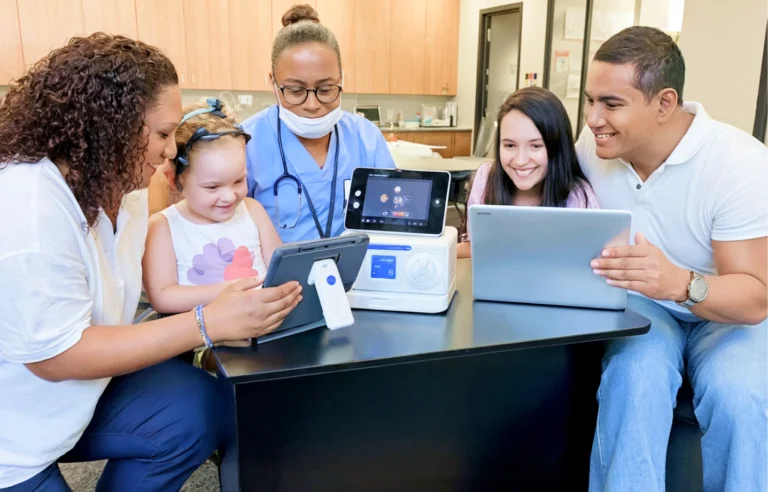


Every August, National Wellness Month invites us to slow down, reconsider our habits, and make more space for physical, mental, and emotional well-being. It is usually associated with personal choices: taking breaks, sleeping better, managing stress, exercising, or becoming more mindful.
But there is another side of wellness that deserves attention.
Today, a significant part of our lives happens through screens. We learn, work, receive care, attend consultations, access support, complete assessments, and make important decisions through digital platforms. Wellness, therefore, is no longer influenced only by what people do away from technology. It is also shaped by what technology asks of them.
A digital experience can make someone feel supported, confident, and understood. It can also leave them overwhelmed, frustrated, disengaged, or invisible.
This National Wellness Month, organizations should ask a different question: are our digital experiences designed around the people using them, or only around the processes they need to complete?
Digital wellness is more than reducing screen time
Digital wellness is often discussed as a matter of personal discipline: spend less time online, silence notifications, or take regular breaks.
Those behaviors can help, but they only address part of the issue. Research increasingly treats digital well-being as a broader relationship between people, technologies, behaviors, and the environments in which digital interactions take place.
The quality of an experience matters.
Consider a patient trying to understand complex health information during an online consultation. A learner completing a demanding digital course after a long working day. A user navigating an unfamiliar wellness platform while already feeling stressed.
The platform may technically work. The video may play correctly. The information may be accurate. The form may be completed.
But none of these facts tells us how the person actually experienced the interaction.
Were they attentive? Did they become overwhelmed? Was a critical explanation delivered at the wrong moment? Did they lose engagement halfway through? Did the experience adapt when their response changed?
Traditional digital analytics can reveal clicks, completion rates, viewing time, and drop-off points. These signals are useful, but they rarely capture the full human experience behind the data.
Engagement is not the same as well-being
A person can remain on a page without feeling involved. They can complete a video while barely absorbing its message. They can finish an online program even though parts of the experience created confusion or stress.
This distinction is especially important in digital health and wellness services, where sustained engagement is often difficult to achieve. Recent research into digital mental health has highlighted persistent engagement challenges, including inconsistent metrics and limited understanding of how engagement connects to meaningful outcomes.
This does not mean organizations should simply try to capture more attention.
In fact, designing only for longer sessions, more clicks, or constant interaction can conflict with genuine well-being. A wellness-focused experience should not maximize engagement at any cost. It should make the interaction clearer, more relevant, and more respectful of the person’s needs.
The goal is not to keep users online.
The goal is to make the time they spend online more valuable.
From static journeys to responsive experiences
Most digital experiences follow a predefined path. Every person receives the same explanation, content sequence, pace, and call to action.
But people do not experience those journeys in the same way.
Some users need more time. Others need a simpler explanation. Some remain engaged through long-form content, while others begin to lose attention quickly. A message that reassures one person may confuse another.
Responsive digital experiences recognize that variation.
By understanding observable, non-verbal signals during an interaction, organizations can begin to identify patterns that traditional analytics often miss. These insights can help teams explore questions such as:
- At which point does attention begin to decline?
- Which parts of a digital journey generate stronger engagement?
- Does a specific explanation create visible confusion or discomfort?
- Which content formats appear to sustain a more positive experience?
- Where could the journey be simplified, shortened, or adapted?
This is not about reading minds or determining exactly what someone thinks. Human emotions are complex and always influenced by context.
It is about giving experience designers an additional layer of information: observable signals that can help them understand how digital content is being received.
What emotionally aware experiences could look like
Imagine a digital patient education experience that recognizes when attention begins to decrease and pauses before presenting the most important information.
Imagine an online wellness program that adjusts the pace of its content when engagement changes.
Imagine an educational platform that helps content teams identify lessons where learners consistently lose focus, allowing those lessons to be redesigned.
Imagine a virtual consultation platform that gives professionals an additional, clearly contextualized indication that part of an explanation may not have been understood.
These experiences do not need to diagnose users, identify them, or create permanent emotional profiles.
When implemented responsibly, Emotion AI can operate as an experience layer: helping digital platforms become more adaptive while leaving interpretation and important decisions in human hands.
Wellness requires trust
A technology cannot support well-being if people feel watched by it.
Emotionally aware experiences must therefore be built around transparency, clear purpose, proportionality, and user control. People should understand when the technology is active, what signals are being analyzed, why they are being used, and what happens to the resulting data.
Architecture also matters.
MorphCast processes facial signals directly on the user’s device. Video does not need to be sent to a remote server for analysis, and the technology does not require facial identification or a biometric identity database.
This client-side approach allows organizations to add real-time emotional and attention insights while reducing the need to transfer sensitive visual information.
Privacy should not be added after an experience has been designed. It should shape the experience from the beginning.
Better experiences begin with better questions
Organizations often ask whether users completed a journey.
For digital wellness, healthcare, and education, that question is no longer enough.
We should also ask:
- Did the experience respect the person’s attention?
- Was the information delivered in a way they could absorb?
- Did the platform recognize when the interaction was no longer working?
- Could the experience have adapted instead of expecting the person to adapt?
National Wellness Month is a useful reminder that well-being is not created only through dedicated wellness products. It is influenced by every digital interaction that demands someone’s time, attention, and emotional energy.
The next generation of digital experiences will not simply be faster or more automated. They will be more considerate of the humans using them.
Designing digital experiences around people
MorphCast helps organizations integrate real-time attention, engagement, and emotional signals into digital experiences through a privacy-first, client-side Emotion AI engine.
The technology can support platforms across healthcare, education, digital wellness, research, and interactive media—without facial identification and without sending video to external servers for analysis.
Because a digital experience should do more than function correctly. It should work for the person on the other side of the screen.
Are you exploring how emotionally aware technology could improve your digital experience? Contact the MorphCast team to discuss your use case.