

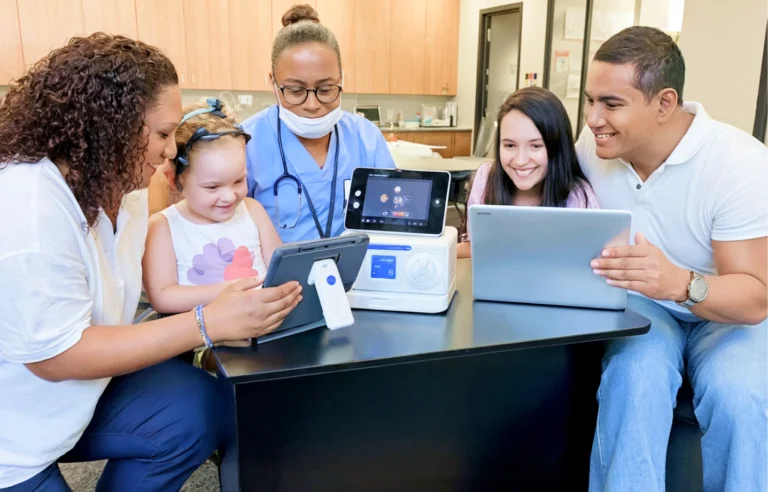

Boost patient understanding and trust in digital care with real-time emotional context.
Contact us Contact usSee what patients don’t say
Remote and digital care can reduce visibility into how patients are truly processing information. MorphCast adds privacy-aware emotional context signals to telehealth and digital journeys—helping teams communicate with more clarity, reassurance, and consistency in the moment, without claiming clinical diagnosis.
What gets missed in virtual care
Patients don’t fully understand what you tell them
Key instructions get lost, especially when stress is high.
Patients say “yes” just to move on
They avoid admitting confusion, so issues surface later as non-adherence and follow-ups.
Telehealth struggles to feel personal
Without human cues, trust takes longer and satisfaction drops.
You can’t see confusion in time
Nods and “yes” can hide uncertainty; problems emerge after the visit.
Digital education is one-size-fits-all
The same content is delivered even when patients need a simpler pace or extra reassurance.
Communication training doesn’t translate to real care
It’s hard to practice empathy, clarity, and de-escalation in realistic scenarios.

The cost of missed signals
Lower adherence
Missed steps, incorrect follow-through, delayed recovery
More repeat interactions
Avoidable calls, messages, and follow-ups that overload staff
Rising frustration
Patients disengage, satisfaction declines, trust erodes
Late detection of distress
Support arrives after the moment when it would help most
Inconsistent patient experience
Quality varies by provider, shift, and workload
Higher risk moments
Misunderstandings compound in sensitive conversations (diagnosis, consent, next steps)
With MorphCast, you can turn real-time emotional context into action
SOLVE IN THE MOMENT
Improve understanding and follow-through (in the moment)
Patients can look “fine” while they’re actually confused or overwhelmed—especially remotely. MorphCast helps you catch those moments early and respond immediately: simplify explanations, confirm understanding, adjust pace, and guide next steps. The result is clearer communication, better adherence, and fewer avoidable follow-ups.

MorphCast Engine: real-time context for better care
Patient emotions drive health outcomes. MorphCast adds real-time emotional context to digital care, allowing for clearer, more reassuring, and consistent communication when it matters most.
Try the demo Try the demoBuild trust with more human virtual interactions
Telehealth can feel impersonal when emotional cues are missing. MorphCast supports more empathetic, patient-centered conversations by prompting timely reassurance and better phrasing—so patients feel heard, supported, and confident. This strengthens trust and improves satisfaction across remote touchpoints.
Scale quality and accountability with privacy-first insights
Delivering a consistent patient experience across teams is hard—especially at scale. MorphCast provides aggregated signals and analytics to improve training and QA, reinforce communication standards, and prove what’s working over time. It’s designed to be privacy-first and consent-aware, with non-diagnostic outputs intended to support communication—not clinical diagnosis.