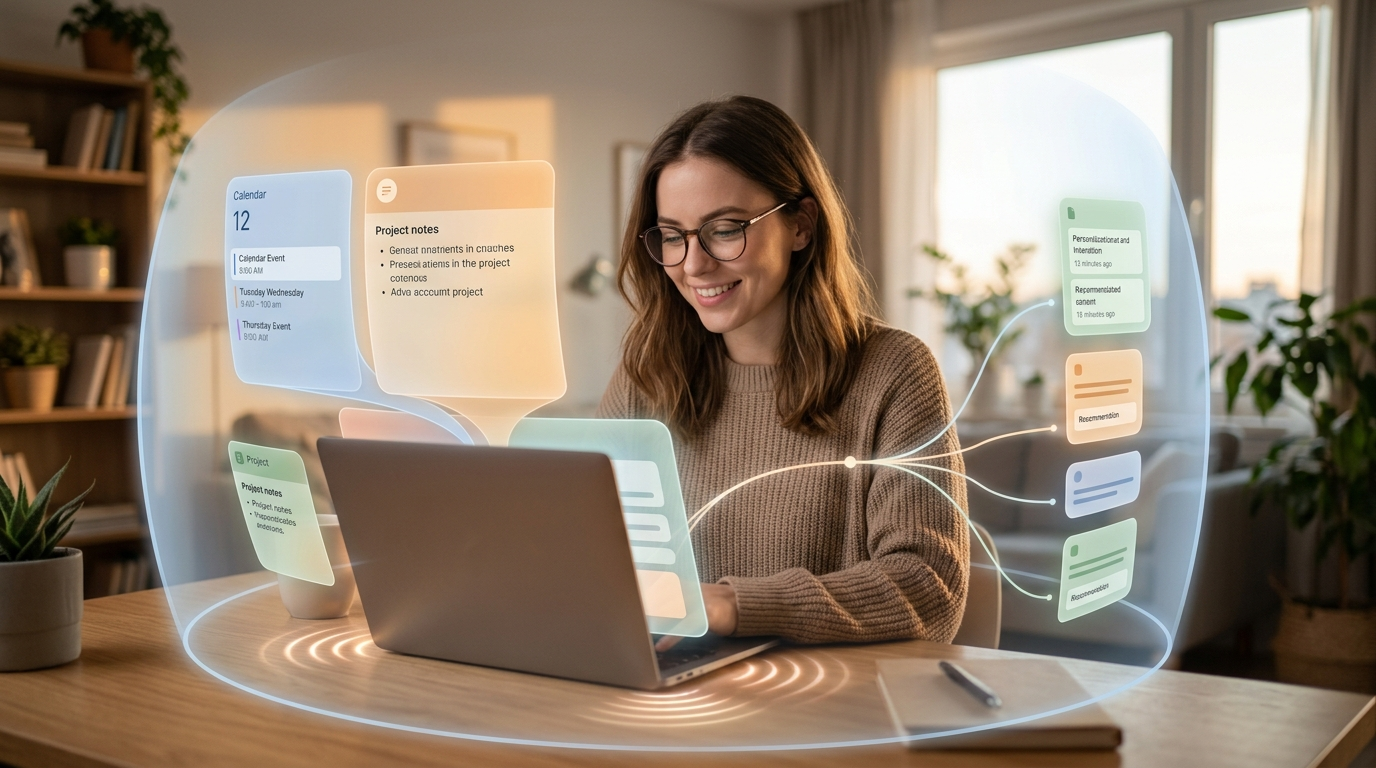
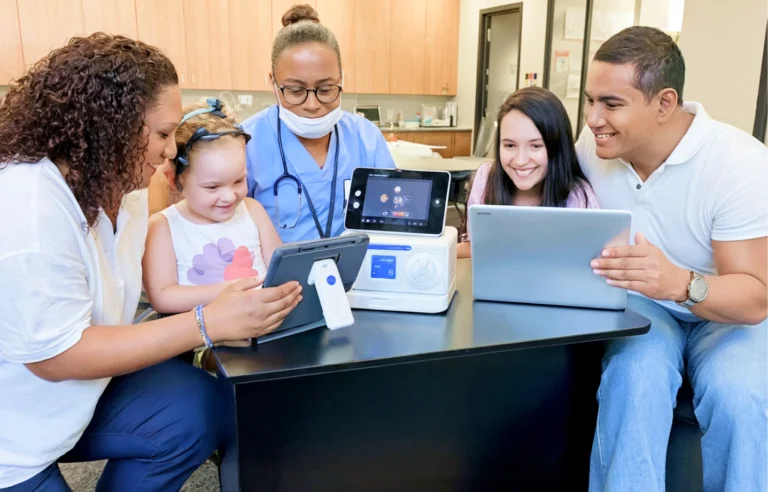


Digital learning platforms are very good at measuring activity. They can tell us whether someone opened a lesson, how long they stayed, whether they completed it, and sometimes how they performed on an assessment.
What they often cannot tell us is how the learner actually experienced the process. Were they engaged? Did they understand where they were performing well? Did they recognize where they needed to improve?
Two real-world implementations using MorphCast offer an interesting perspective on how emotion-aware learning can add another layer to digital learning and training.
Practicing job interviews with A-dapt
A-dapt, working with UK charity Nacro Education, created the Adaptive-Media® Interview Coach to help young people prepare for job interviews remotely. The experience combines training content with realistic interview scenarios, allowing learners to practice answering different types of questions and then test what they have learned through an Emotion AI-powered interview simulator.
The system does not focus only on the words being spoken. It also provides feedback related to non-verbal aspects of the interaction, including positivity and attention, with the aim of helping learners become more aware of how they present themselves during an interview and improve through practice.
Testing conducted after the introduction of the tool reported:
- 29% improvement in engagement
- 49% increase in confidence
- 56% improvement in the quality of answers
The project also made the coaching experience available remotely, reducing the need for face-to-face training and making the approach easier to scale.
What is interesting here is not simply that emotional or behavioral signals were detected. Those signals became part of a practical feedback loop: practice, receive feedback, understand your performance, and try again.
Improving storytelling at London Business School
A similar principle was applied in a very different learning context. Make Real developed an AI-powered storytelling practice app for London Business School, where storytelling plays an important role in areas such as leadership, career development, and communicating personal success.
The app uses MorphCast to analyze facial expressions while learners practice telling a story. It then provides feedback and summaries related to their emotional delivery, helping users reflect not only on the structure of their story but also on how they communicate it.
The project included a study comparing people using the AI-powered application with a control group using traditional learning materials. The AI group reported:
- 7% increase in confidence in storytelling skills
- 21% greater understanding of personal storytelling strengths
- 19% greater understanding of areas for improvement
- 17% greater understanding of how to structure a compelling story
Because the analysis runs directly on the user’s device, the experience was also designed to provide real-time feedback without needing to store or transmit personal video data.
Again, the value was not in measuring emotion for its own sake. The technology was used to help learners notice aspects of their own performance that can be difficult to identify without external feedback.
What do these two implementations have in common?
The two applications are quite different: one focuses on job interview preparation, the other on storytelling and leadership skills. But the underlying idea is similar.
Traditional learning analytics tend to describe what happened: a lesson was opened, completed, repeated, passed, or abandoned. Emotion-aware experiences can add another layer by introducing non-verbal signals into the learning process and turning them into feedback.
In both cases, the technology supported three areas that matter in learning:
- Engagement — whether the learner is actively involved in the experience
- Self-awareness — whether the learner better understands their own performance
- Feedback — whether that understanding can be turned into something useful and actionable
This moves Emotion AI beyond analytics alone and makes it part of the learning experience itself.
What these results do not tell us
These two implementations are encouraging, but they should not be treated as proof that Emotion AI will improve learning outcomes in every context. They involve different audiences, learning goals, methodologies, and measures of success, and the published results do not provide the kind of large-scale dataset needed to draw broad conclusions about education as a whole.
Facial expressions also cannot tell us exactly what a learner is thinking or why they are reacting in a particular way. Emotion AI works with observable signals, and those signals need context. They are most useful when combined with other information, such as assessments, learner feedback, completion data, or educator observations.
The point, then, is not that emotion-aware technology should replace traditional learning measurement. It may be more useful as a way to complement it.
What this means for digital learning
Digital education has spent years getting better at measuring activity. The next step may be getting better at understanding the experience behind that activity.
A completion rate can tell us that someone reached the end of a lesson. It cannot necessarily tell us where they struggled, when their attention changed, or whether the experience helped them understand their own performance.
Emotion-aware technology adds the possibility of capturing some of that missing context and, more importantly, using it to provide feedback while learning is actually happening.
The A-dapt and London Business School implementations do not provide a universal answer, but they point toward a more responsive model of digital learning: one in which learners do not simply consume content and generate analytics, but receive feedback that can help them reflect, adapt, and improve.
That may be where the real value of Emotion AI in education begins.