


Are you concerned that a trained, tireless, and efficient AI might replace your job? You’re not alone. The advent of generative AI, especially ChatGPT, has unsettled even those in high-skilled roles, from software engineers to creative sector workers. Just last year, SAG-AFTRA and the Writers Guild of America launched their first simultaneous strike in over 60 years, demanding clear rights for human creators in an age where AI is increasingly able to mimic their work. Continue reading to discover more about AI and workplace.
Will AI Destroy Jobs?
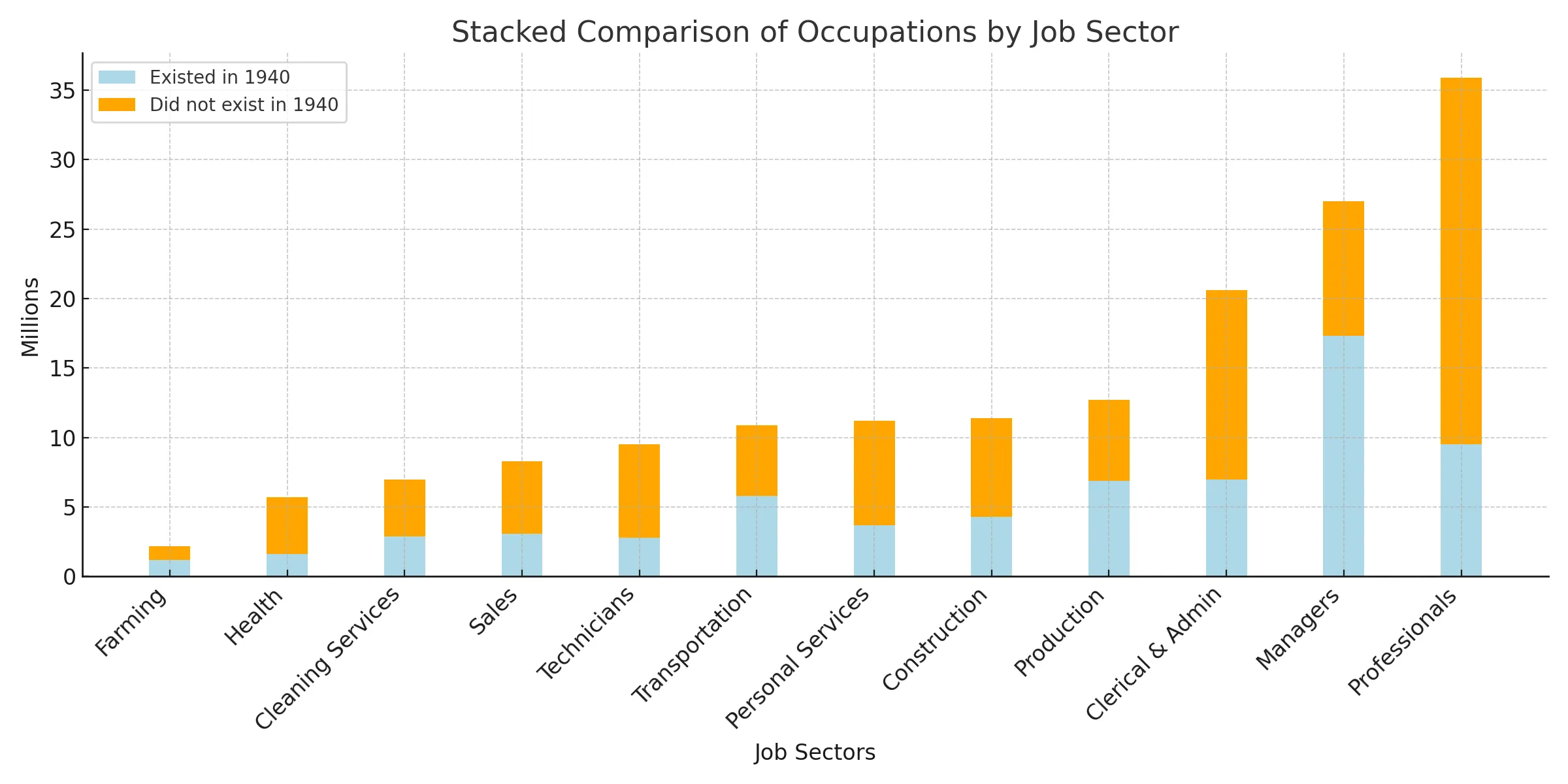
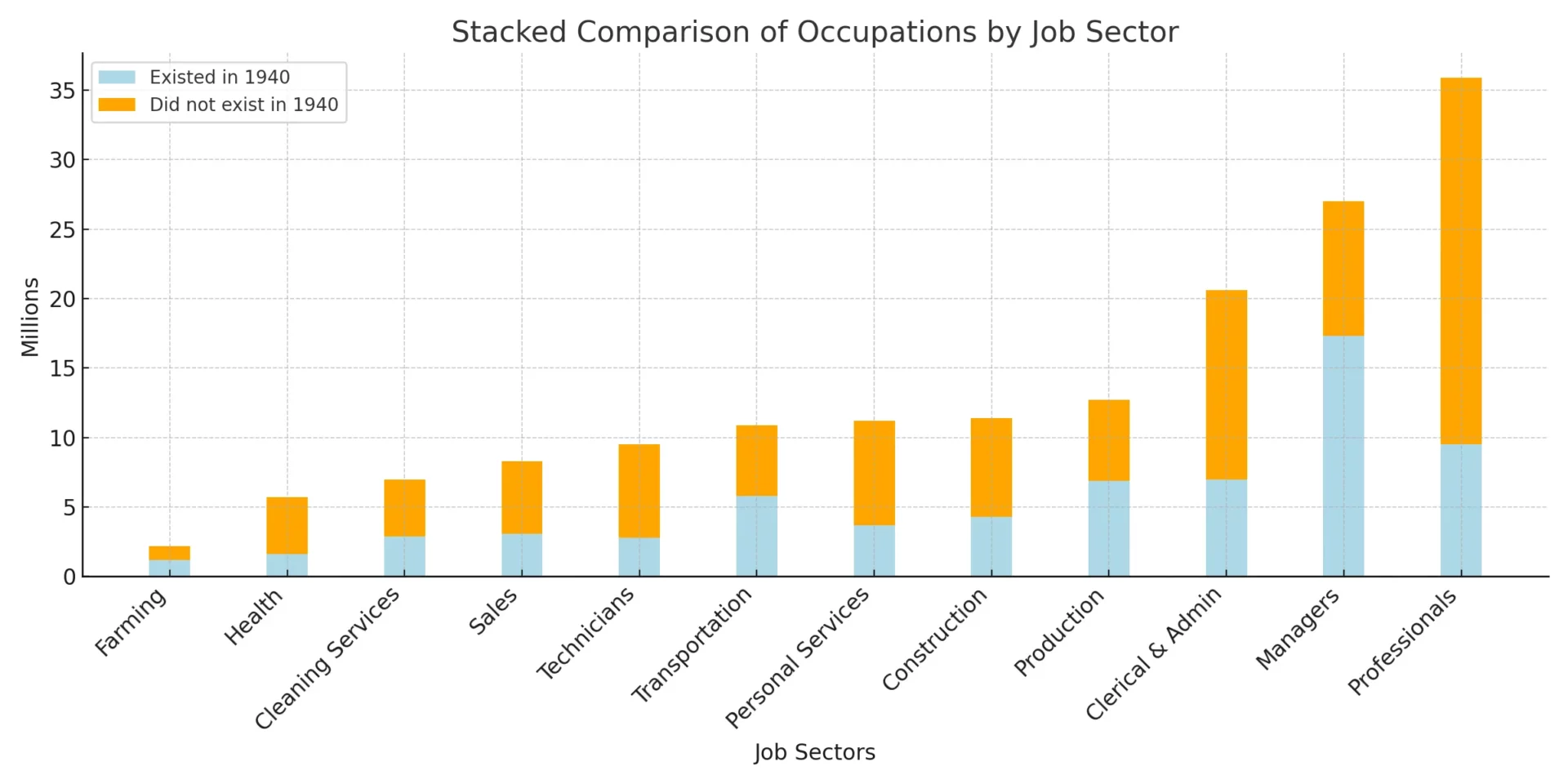
Historical patterns show that technology has consistently reshaped labor markets—from scribes displaced by the printing press to horse carriers replaced by cars, to factory automation. AI poses threats to certain jobs but also creates new opportunities. For instance, the integration of AI in various fields has led to the emergence of new roles focused on managing and enhancing AI capabilities. The economic benefits of AI, such as increased productivity and innovation, often lead to job market expansion, potentially offsetting the jobs lost to automation.
Will AI Create More Jobs Than It Destroys?
Researchers and experts agree that AI and automation will change many jobs and displace certain types of work, but they are also likely to create new opportunities, potentially leading to a net increase in employment. For example, productivity gains from AI consistently lead to improvements in employment and wages, suggesting that as businesses become more efficient through AI, they can expand and generate new jobs.
Supporting Evidence
- Productivity Gains: A 2022 meta-analysis of 127 studies cited in “Artificial Intelligence and the Future of Work: Job Shifting Not Job Loss” (2024) states that productivity increases consistently led to improvements in employment and wages.
- Sectoral Shifts: Technological advancements historically lead to shifts in job types, with AI accelerating the transition to service-oriented and high-tech roles.
Generative AI and Economic Growth
According to a 2023 Goldman Sachs report, the transformative potential of generative AI could boost global GDP by 7% and significantly enhance productivity growth, introducing new roles that could offset those lost to automation. The OECD data shows that despite automation, unemployment rates in member countries have generally decreased, indicating that job creation has kept pace with or exceeded job losses due to automation.
Concrete Examples Across Industries
AI extends across creating new content, enhancing productivity in sectors from manufacturing to software development, and reshaping roles in journalism and graphic design. AI-driven analytics in finance and automation in retail are examples where AI complements human work. In healthcare, AI assists in diagnostics, augmenting rather than replacing human professionals. Specifically, Generative AI is not the only type of AI that will create waves in the sector. MorphCast, as a Facial Emotion Recognition AI provider, is at the center of this evolution. This is one of those cases where AI doesn’t replace human professionals but complements and facilitates their job: tools like our Emotion AI Video Conference platform provide a deeper and automated understanding of subtle emotional shifts in patients that therapists and other health professionals can leverage for data-based assessments.
Further Impacts of AI on the Workforce
AI’s rapid adoption and the productivity paradox it presents mean that while there may be short-term disruptions, the long-term benefits could be substantial. This mirrors past technological revolutions where initial slow productivity growth was followed by significant gains as industries adapted to new technologies. The impact of a new groundbreaking technological advancement typically follows a “J” curve, where growth lulls for years while industries figure out how to leverage the new tech and then spikes in a short amount of time.
Easing the Transition
An ethical approach to AI development is essential. Policies that encourage responsible AI use ensure that AI’s benefits are widely distributed. This includes environments that promote continual learning and policies that balance automation with job creation and workforce retraining.
Conclusion: AI and Workplace
The net impact of AI on global workforces depends on our actions. While AI presents challenges in the form of job displacement, it also offers opportunities for job creation and workforce transformation. The extent of this shift’s pain depends on our capacity as stakeholders to push for the most ethical approach to AI and not leave marginalized workers behind. A balanced approach, involving strategic planning and proactive policy-making, is crucial to harnessing the benefits of AI while preparing the workforce for the new landscape of employment.
Bibliography
- Mutascu, M. (2021). “Artificial Intelligence and Unemployment: New Insights.” Economic Analysis and Policy, Volume 69, March 2021, Pages 653-667.
- Kolade, O., & Owoseni, A. (2022). “Employment 5.0: The work of the future and the future of work.” Technology in Society, Volume 71, November 2022, 102086.
- Goldman Sachs. (2023). “Generative AI and Economic Growth.” Read the article.
- Stropoli, R. (2023). “A.I. Is Going to Disrupt the Labor Market. It Doesn’t Have to Destroy It.” Chicago Booth Review, November 14, 2023. Read the article.
- George, A. S. (2024). “Artificial Intelligence and the Future of Work: Job Shifting Not Job Loss.” Partners Universal Innovative Research Publication (PUIRP), Volume: 02 Issue: 02, March-April 2024, www.puirp.com, DOI: 10.5281/zenodo.10936490, Page | 17.
Follow the visionary articles in the AI & Humanity category on our blog!